
82 short answers · 6 sections
Kashmiri Food, Culture and Shopping: Handy Answers
Handy answers on Kashmiri food and drink, wazwan dishes, tea and bakery breakfasts, vegetarian and allergy needs, shrine manners, shawls, saffron and crafts.
- Free custom quotes from our tour planners
- Package tours for Jammu, Kashmir and Ladakh
- Houseboats on Dal and Nigeen lakes, hotels and cabs
- Pay as you go: no stress on payments
Free custom quote · Step 1 of 2
Where do we reach you?
Enquiring about: Food and shopping
Food, manners and shopping shape a Kashmir trip as much as the views do. These answers explain the dishes you will meet, how to order for different diets, what to wear and ask at shrines and workshops, and how to compare a shawl, a carpet or a pack of saffron. They draw on Soun Kashmir's food and culture guides, and kitchens and sellers vary, so confirm details on the spot.
Everyday food and drink
16 questions
What would a typical Kashmiri lunch look like?
Rice with one curry and a vegetable side makes a typical Kashmiri lunch, with rogan josh for meat eaters or haak and dum aloo for a vegetable plate. The same dishes can taste quite different across kitchens because the heat and gravy base vary.
Read more about Kashmiri FoodRogan josh on the menu: what am I getting?
Rogan josh brings lamb or mutton in a red, aromatic gravy, usually eaten with plain rice so the spices remain the centre of the dish. The colour alone gives little indication of the amount of chilli.
Read more about Kashmiri FoodDoes red gravy mean fiery?
A red Kashmiri gravy can look intense while tasting mild because its colour comes from the spice mixture as well as the amount of chilli. Dried ginger, fennel, cardamom and cloves give some preparations an aroma that is separate from chilli heat.
Read more about Kashmiri FoodWhat are haak and nadru?
Haak is a way of serving leafy greens, and nadru is lotus stem, which appears in a yoghurt gravy or fried as a snack. Both suit a vegetarian plate, and you should ask about the gravy base.
Read more about Kashmiri FoodHow do I eat well on a short stay?
A bakery breakfast, rice and curry at lunch, and a longer Srinagar dinner fit local food into a short Kashmir stay without making every stop a sit-down meal. The longest meal works best on a city evening with no late hill drive.
Read more about Kashmiri Culture and Food JournalWhere should I eat on a hill day?
A hot, freshly cooked hill-day lunch works best at a stop before the return drive, rather than after a long afternoon on the road. A sealed snack and water give the group a fallback if it reaches the stop late.
Read more about Kashmiri FoodWhich Kashmiri snacks are easy to eat on a walk?
Bakery bread is easy to take on a Kashmir market walk, while freshly fried lotus-stem pieces suit a short stop when there is time to eat them hot. Loose sauces and milk sweets are less convenient to carry between stops.
Read more about Kashmiri FoodWill I find international dishes?
Some larger Kashmir hotels serve dishes from several cuisines, which gives a group an alternative when only some travellers want a full local meal. A separate Kashmiri dish such as rogan josh or haak lets people try a smaller part of the menu.
Read more about Hotels and Houseboats in Srinagar and KashmirWhat do locals drink besides tea?
Kashmir's two best-described everyday tea choices are kahwa and noon chai, while the drinks available apart from tea depend on the individual hotel or kitchen. Breakfast menus are a useful starting point when someone needs a particular drink or avoids milk.
Read more about Kashmiri Culture and Food JournalWhich evening suits a long dinner in Srinagar?
A long dinner in Srinagar fits a city evening better than the end of a Gulmarg or Pahalgam day, when hill traffic could compress the meal. For a houseboat guest eating ashore, the ghat crossing is part of the evening timing.
Read more about Kashmiri Culture and Food JournalWhat should I try for breakfast?
A bakery breakfast in Kashmir can be girda or lavasa with noon chai, while a kitchen serving winter harissa offers a heavier start to the day. Warm bread suits a short stop and harissa is a sit-down meal.
Read more about Kashmiri FoodIs spicy food a risk for children?
Plain rice, bakery bread and a mild vegetable give children a simple first Kashmiri meal before they decide whether to try a more strongly spiced curry. Spice level, small bones and dairy depend on the dish rather than its colour.
Read more about Kashmiri FoodHow do I tell a fresh dish from a reheated one?
Food cooked to order and served hot is easier to assess than a prepared dish that has been sitting out for an unknown amount of time. A busy kitchen can have faster turnover, though that alone does not establish how an item was handled.
Read more about Kashmiri FoodWhy is plain rice served with several Kashmiri curries?
Plain rice gives a Kashmiri meal a base for tasting several gravies, from an aromatic meat curry to a side of cooked greens or lotus stem. The rice softens the intensity of the sauces without adding a competing flavour.
Read more about Kashmir Tour Package Price ListShould I eat before a long drive?
A lighter meal before a long Kashmir hill drive leaves room for a planned stop and may suit passengers who feel unwell on winding roads. A sealed snack and drinking water keep the group from relying on the timing of a roadside lunch.
Read more about Kashmiri FoodIs there a famous Kashmiri dessert?
Phirni and shufta are two Kashmiri sweets with different textures, one a soft rice pudding and the other a rich mixture of dried fruit and nuts. The recipes may include ingredients that matter to people avoiding milk or tree nuts.
Read more about Kashmiri FoodWazwan and signature dishes
16 questions
What changes when wazwan courses arrive one by one?
A Kashmiri wazwan unfolds over several courses, so the shared rice and earlier preparations are still part of the meal as the later meat dishes arrive. That pace makes it a sitting of its own rather than one quick dinner order.
Read more about Kashmiri Culture and Food JournalWhy do some restaurants offer single wazwan dishes?
A kitchen can offer selected wazwan preparations with rice even when it is not serving the full feast, which takes more time and preparation. The individual order gives a small group one course to try without reserving a whole sitting.
Read more about Kashmiri Culture and Food JournalWhy is wazwan served on one big platter?
A trami is the broad platter often used to serve Kashmiri wazwan, with rice and the first preparations placed together for several diners to share. That arrangement shapes the meal as a social occasion, though serving practice varies by kitchen.
Read more about Kashmiri FoodWhich wazwan dishes should a beginner try?
Rista and gushtaba give a first-time wazwan diner two recognisable meatball courses, one in a red gravy and the other in a yoghurt-based gravy. Either may be available as an individual order with plain rice if the kitchen serves courses separately.
Read more about Kashmiri FoodTabak maaz sounds rich: how is it served?
Tabak maaz is served as ribs that have been cooked until tender and then fried, giving each piece a richer outside and a soft interior. The use of milk and the size of the portion depend on the preparation.
Read more about Kashmiri FoodWhat is yakhni?
Yakhni is meat cooked in a yoghurt gravy in Kashmiri cooking, with a flavour often milder than the red gravies on the same menu. Its pale colour does not make it suitable for a guest who avoids dairy.
Read more about Kashmiri FoodWhat is aab gosh?
Aab gosh is a wazwan preparation made with lamb or mutton cooked in a spiced milk gravy, rather than a red or yoghurt gravy. The milk is part of the dish, which matters when comparing courses for a dairy restriction.
Read more about Kashmiri FoodCan a guest eat a wazwan course without sharing rice?
A Kashmiri wazwan commonly uses a shared platter, but a restaurant serving individual courses may provide rice separately for a diner who prefers an individual plate. Service depends on whether the meal is a set feast or an ordinary order.
Read more about Kashmiri Culture and Food JournalWhich wazwan preparations use milk rather than yoghurt?
Aab gosh is associated with a milk gravy, while preparations such as yakhni and gushtaba use yoghurt to give their sauces a different character. Both bases contain dairy even though the dishes do not taste or look alike.
Read more about Kashmiri Culture and Food JournalWho should avoid the feast?
A shared Kashmiri wazwan may be unsuitable for a diner with a strict food rule because several meat courses and dairy-based preparations arrive over one meal. Separate plates give a mixed group more control over which dishes each person receives.
Read more about Kashmiri FoodWhat is the best way to order for a group?
A group ordering Kashmiri food can share a few dishes around rice and bread while keeping separate main orders for guests with strict dietary needs. Portion size depends on the kitchen, especially when a dish is listed both by portion and for sharing.
Read more about Kashmiri FoodIs dum aloo a meat-free dish?
Dum aloo is a Kashmiri potato preparation commonly served as a vegetarian choice, but the ingredients in its gravy still vary from one kitchen to another. Stock, ghee, onion or garlic may matter even when the dish contains no meat.
Read more about Kashmiri FoodWhat is a kebab stop like?
A Kashmir kebab stop usually means grilled pieces or minced meat served hot from a grill, which makes it different from a curry and rice meal. Portions vary, so a small stop may be enough for a snack rather than a full lunch.
Read more about Kashmiri FoodWhat if I do not eat red meat?
A diner avoiding red meat in Kashmir can build a meal around rajma, vegetables, bread and rice, provided the kitchen uses a suitable gravy base. Plain sides and a separately prepared main are useful when other guests order meat.
Read more about Kashmiri FoodWhat is the gushtaba gravy made of?
Gushtaba is a wazwan meatball course distinguished by its yoghurt-based gravy and is often brought out late in the meal after several stronger preparations. The creamy base matters for anyone avoiding milk products, even when the portion looks small.
Read more about Kashmiri FoodWhich cooking spices appear in Kashmiri food?
Kashmiri gravies may use fennel, dried ginger, cardamom and cloves as well as chilli, so aroma and heat are separate qualities in the same dish. The balance differs among cooks, which makes colour an unreliable indicator of spice intensity.
Read more about Kashmiri FoodVegetarian, Jain, halal and allergy needs
10 questions
Can a strict vegetarian travel comfortably?
A strict vegetarian traveller in Kashmir has options such as haak, rajma and dum aloo, but the gravy and cooking utensils matter alongside the main ingredient. Ghee, stock, onions and garlic are worth clarifying when any of them falls outside a guest's usual diet.
Read more about Kashmiri FoodHow do I explain Jain needs?
A Kashmiri kitchen can interpret Jain food requirements more accurately when it receives the specific exclusions, such as onion and garlic, before the meal is set. The same dish name does not mean every property uses the same recipe or cookware.
Read more about Kashmir Tour Package from AhmedabadIs halal meat standard?
Halal preparation in Kashmir is a question for the individual kitchen, since the name of a meat dish alone does not identify its source or handling. A set menu gives less room to choose separately once the courses have been prepared.
Read more about Kashmiri FoodWhat should I do about an allergy?
A visitor with a food allergy in Kashmir needs ingredient and handling information from the kitchen because a garnish, shared utensil or frying oil may contain the allergen. A different dish or kitchen is the safer option if the answer is unclear.
Read more about Kashmiri FoodAre nuts and dairy common?
Nuts and dairy can appear in Kashmiri drinks and gravies, with almonds sometimes in kahwa and milk or yoghurt in several sweet or savoury dishes. A familiar-looking name is not enough to tell whether a particular kitchen includes either ingredient.
Read more about Kashmiri FoodCan a vegan find enough to eat?
A vegan meal in Kashmir can combine rice, a suitable bread, rajma and greens when the kitchen uses oil and vegetable stock rather than ghee or dairy. Bread and gravy preparation vary, so the dish names alone cannot establish that the whole plate is suitable.
Read more about Kashmiri FoodCan we have a meat-free wazwan?
A traditional wazwan centres on meat, so guests wanting a vegetarian meal usually do better with separate orders of rice, dum aloo, haak or nadru. The alternatives can share the occasion without relying on a kitchen to reproduce every feast course.
Read more about Kashmiri FoodHow do I handle South Indian vegetarian expectations?
A South Indian vegetarian traveller can usually build a familiar base from plain rice and gently cooked vegetables in Kashmir, though the gravies and seasonings differ from home. A kitchen's ability to make a simple separate plate depends on its set menu and ingredients.
Read more about Kashmir Tour Package from Tamil NaduWhat if a child refuses local food?
Bread, plain rice and mild vegetables are simple fallbacks for a child who finds unfamiliar Kashmiri dishes too strongly flavoured on the first few meals. A short meal near the hotel can leave more room to try something new when the day is less busy.
Read more about Kashmiri FoodIs the water safe for brushing teeth?
Sealed bottled or treated drinking water is an option for brushing teeth on a Kashmir trip when the water from the bathroom tap is uncertain. The same uncertainty applies to ice unless its water source is known.
Read more about Kashmiri FoodBakery, tea and sweets
10 questions
Why is the tea pink and salty?
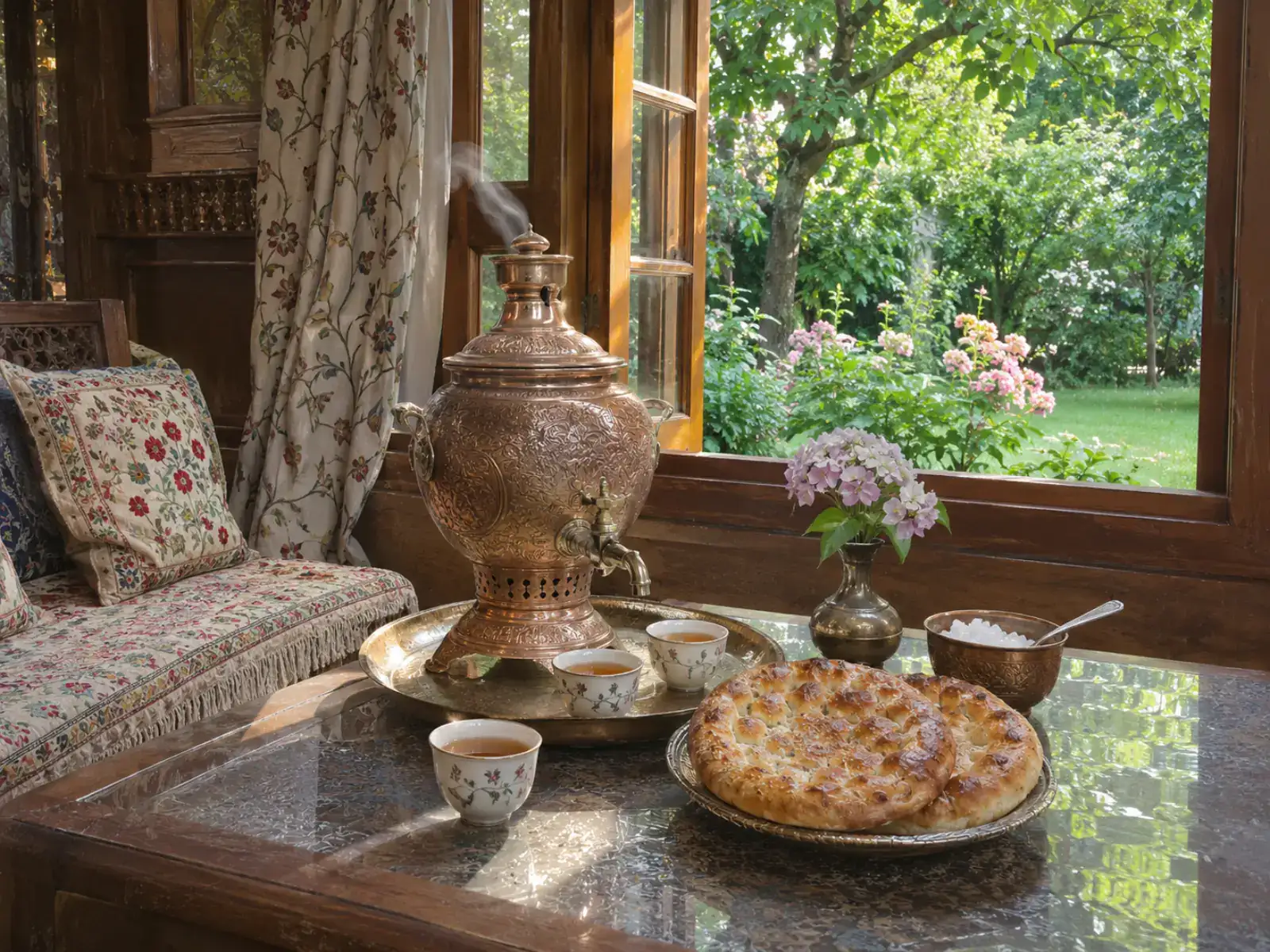
Noon chai gets its distinctive taste from salt and milk, and the tea is often pink and served with bread at breakfast in Kashmir. A small cup is enough to try the flavour alongside a warm bakery loaf.
Read more about Kashmiri Culture and Food JournalWhat is kahwa?
Kahwa is an aromatic Kashmiri tea that can contain saffron, spices or almonds, with a recipe and sweetness that vary by kitchen or host. An almond garnish is worth identifying separately if someone in the group avoids nuts.
Read more about Kashmiri FoodWhat are girda and lavasa?
Girda and lavasa are oven-baked Kashmiri breads that appear at bakery breakfasts and are often eaten warm with a cup of salted noon chai. The timing of the bake makes a difference when a traveller wants a loaf straight from the oven.
Read more about Kashmiri FoodWhat is bakirkhani?
Bakirkhani is a layered bakery bread that works with tea for breakfast or a snack, with a texture distinct from breads served as everyday sides. It is usually most enjoyable warm, soon after the bakery has taken it from the oven.
Read more about Kashmiri FoodWhy does a bakery breakfast differ from a harissa stop?
A Kashmir bakery stop can be a short visit for bread and tea, while winter harissa is a slow-cooked meat breakfast eaten as a fuller meal. A kitchen may serve harissa only on certain days during the colder part of the year.
Read more about Kashmiri FoodAre nadru fritters worth trying?
Nadru fritters are pieces of lotus stem fried and served hot, making them a more substantial snack with Kashmiri tea than a plain loaf. Their coating and frying oil can vary with the kitchen, which matters for some diets.
Read more about Kashmiri FoodWhy is phirni a poor choice for the journey home?
Phirni is a chilled rice pudding and is harder to carry on a long journey than sealed dry foods because it needs to stay cool. A portion eaten at the meal avoids the storage problem, and recipes may include milk or nuts.
Read more about Kashmiri FoodWhat gives shufta its different textures?
Nuts and dried fruit give Kashmiri shufta a mixture of firm, crunchy pieces and softer, chewy ones in what is usually a rich sweet dish. The exact combination depends on the kitchen, so two servings need not taste or feel the same.
Read more about Kashmiri FoodHow does bakirkhani differ from simple breakfast bread?
Bakirkhani brings a layered texture to a Kashmir bakery breakfast, while familiar breads such as girda and lavasa offer a different bite beside the tea. An oven-fresh sample makes the difference easier to notice without buying a large portion.
Read more about Kashmiri FoodHow do I try Kashmiri tea properly?
A Kashmir tea stop can start with salty noon chai and bread at breakfast, while aromatic kahwa suits a slower afternoon or the end of a meal. Both may appear at other times as well, depending on the kitchen or host.
Read more about Kashmiri Culture and Food JournalCulture, customs and dress
14 questions
Is there a dress code at Kashmir's holy places?
Modest clothing is a practical choice at Kashmir's shrines and mosques, where instructions about shoes, head covering and access can differ by site and prayer time. A loose layer or scarf gives a visitor a simple way to follow local guidance.
Read more about Kashmiri Culture and Food JournalCan I photograph inside a shrine?
Photography inside a Kashmir shrine depends on the site's rules and the permission of the people being photographed, especially when worship is in progress. A visitor can leave the camera away when the space is restricted or the rule is unclear.
Read more about Kashmiri Culture and Food JournalMay I point my camera at an artisan or a stall holder?
A photograph of a Kashmiri artisan or stall holder is better taken with their permission, because their workspace and the people in it may be private. A person may agree to a picture of the item without being in the photograph themselves.
Read more about Kashmiri Culture and Food JournalWhy do so many locals wear long loose cloaks in winter?
A pheran is a loose traditional Kashmiri garment often worn during cold weather, with heavier wool versions offering more warmth than lighter ones. Visitors can choose their own layers according to how long they will be outdoors.
Read more about Winter in KashmirWhy can a charcoal warmer be risky in a guest room?
A traditional Kashmiri kanger uses charcoal, which can release carbon monoxide indoors even when the room does not smell smoky or feel uncomfortable. Fixed room heating avoids bringing a charcoal burner into an enclosed sleeping area.
Read more about Winter in KashmirHow long do Kashmir's coldest weeks last?
Chillai Kalan is the traditional forty-day coldest stretch of Kashmir's winter, usually counted from the latter part of December into January rather than from one snowfall. Frost and shorter outings are part of planning a visit in that period.
Read more about Winter in KashmirHow do Kashmiris preserve winter vegetables?
Drying vegetables is one way Kashmir households have kept seasonal produce for colder months, when the supply of fresh vegetables and traditional menus can change. A dried-vegetable dish will depend on what that kitchen has prepared for winter.
Read more about Winter in KashmirWhen is a food restriction best mentioned to a host?
A firm food restriction is most useful to a Kashmir home cook before the meal is prepared, because an ingredient may already be in a shared gravy. The specific ingredient gives a host clearer information than a broad label alone.
Read more about Kashmiri Culture and Food JournalHow should I behave in a working craft shop?
A working Kashmiri craft shop is both a studio and a place to buy, so tools and partly finished work may be outside the visitor area. A maker can explain the process before any handling or photography is agreed.
Read more about Kashmiri Culture and Food JournalWhere do I start a first morning in Srinagar?
A short Srinagar morning can pair a bakery with a nearby market lane, leaving time for tea without a long drive between the two stops. A meeting point on an accessible street makes the return easier if the lanes narrow.
Read more about Kashmiri Culture and Food JournalWhat is the old city like for a visitor?
Srinagar's old city rewards a short walk through a few lanes or near the Jhelum, with a visit around Jamia Masjid possible when access suits the day. Narrow streets and differences in walking pace make a compact route useful for mixed-age groups.
Read more about Ten Things to Do in Kashmir on a First VisitWhat festivals might I meet?
Kashmiri festival timing varies by occasion and year, and a celebration can affect where crowds gather or how a property's normal arrangements work during a trip. Current local notices are the useful reference for dates and access.
Read more about Kashmir by SeasonIs it fine to wear shorts in Srinagar?
Shorts can be practical for ordinary Srinagar sightseeing in suitable weather, while mosques and shrines call for modest dress and may have their own entry instructions. A spare layer makes it easier to combine both sorts of visit.
Read more about Kashmir Packing List by SeasonWhy might a saffron field be closed to visitors during bloom?
A flowering saffron field around Pampore is still working farmland, so a bloom does not mean the crop or paths are open for visitors to walk through. Seasonal access and any permitted stopping area depend on the individual field.
Read more about Kashmiri Culture and Food JournalCrafts and shopping
16 questions
Which Kashmiri crafts should I look at?
Kashmiri craft shopping can include a handwoven shawl or carpet, painted papier-mâché, walnut carving or copper work, each made and finished in a different way. The material and method are more useful points of comparison than a sales label on its own.
Read more about Kashmiri Culture and Food JournalHow do I judge a shawl?
A Kashmiri shawl can be assessed by its stated fibre, feel and finish on both sides, because a woven pattern and stitched decoration are different kinds of work. A receipt with the material described preserves what the seller represented.
Read more about Kashmiri Culture and Food JournalWhat should I ask about a carpet?
A carpet's stated dimensions, fibre and method of construction are useful before a Kashmiri purchase, alongside how the pattern and finish look on its back. A written description becomes more useful if the piece will be shipped rather than carried.
Read more about Kashmiri Culture and Food JournalBuying a carved box or a painted tray: what matters?
A carved walnut box and a papier-mâché tray need different checks, because hinges and carving can be important in one and the painted finish in the other. Both benefit from packing that keeps hard luggage edges from pressing against the surface.
Read more about Kashmiri Culture and Food JournalHow do I buy saffron safely?
A sealed Kashmiri saffron pack is easier to compare when its label gives the stated origin, weight and packing information, and the seller provides a bill. Those details establish what was sold without proving the quality of the spice by themselves.
Read more about Kashmiri FoodAre walnuts and dried apricots good gifts?
Walnuts and dried apricots make transportable Kashmir gifts when sold in sealed, labelled packs that do not need refrigeration for the journey home. Food entry rules may apply if the traveller will cross a border.
Read more about Kashmiri FoodWhat does copperware tell me?
A copper item from Kashmir can be made for decoration or for food use, and shape, weight and interior finish do not identify its intended use alone. A clear product description is more reliable than assuming every vessel suits cooking.
Read more about Kashmiri Culture and Food JournalWhy can two shawls of the same size feel different?
The feel of a Kashmiri shawl depends on the fibre, weave and finish, so two pieces of the same length can differ in thickness and drape. A comparison by size alone can miss differences in how the pieces were made.
Read more about Kashmiri Culture and Food JournalHow do I ship something large?
A large Kashmir purchase is easier to ship when the receipt identifies the item and the dispatch agreement describes its packing, delivery and expected arrival. A piece that fits comfortably within the traveller's allowance can instead go with the group.
Read more about Kashmiri Culture and Food JournalWhat could I compare by weight at a Pahalgam market?
Sealed dry fruit is one Pahalgam market purchase where labelled weight helps compare two packs before choosing what to take home in the group luggage. A smaller pack may be easier to carry through the rest of a hill itinerary.
Read more about Pahalgam Travel GuideIs it better to shop on the first or last day?
A look through Srinagar's shops early helps with comparison, while buying near the end of the stay keeps delicate or heavy purchases out of repeated transfers. A late purchase still needs time for packing before the departure.
Read more about Srinagar Itinerary by DaylightCan a carved box travel beside soft luggage?
A carved Kashmir box can sit beside soft luggage if it has enough protective wrapping and is positioned so other cases cannot press against the hinge or corners. A gift that cannot fit comfortably may need a separate shipping plan.
Read more about Kashmir Packing List by SeasonCan I trust a shop my driver recommends?
A driver's recommendation in Kashmir is a starting point for finding a shop, while the stated fibre, material, method and final price still come from the seller. An independent comparison gives the traveller another basis for the purchase.
Read more about Kashmiri Culture and Food JournalWhat should I keep as proof of purchase?
A bill, a specific description of the item and its original label help record what was bought during a Kashmir shopping stop, especially if it will be delivered. A vague bill is less useful when two similar pieces could be confused.
Read more about Kashmiri Culture and Food JournalWhen is the amount on a souvenir bill agreed?
The amount for a souvenir is best settled with the Kashmir seller before wrapping, so the group can still compare what is included with the marked price. A written bill helps record the piece and the sum actually paid.
Read more about Kashmiri Culture and Food JournalWhat souvenirs travel well?
Sealed dry fruit or saffron, a small papier-mâché piece and a shawl that folds flat travel more easily than a heavy carpet or a large carving. Fragile pieces still need protection from knocks, and bulky items depend on available baggage space.
Read more about Kashmiri Culture and Food JournalKeep reading
Pages that go with these answers.
Contact
Get in touch with our tour experts.
Send your dates and the places you want to visit. Ask the Srinagar team to compare routes, rooms and transport for your family, couple or group.
- Sathu Bala, Barbar Shah, Srinagar
- +91 99064 48017
- +91 98997 44801
Free custom quote · Step 1 of 2